

Great customer engagement doesn’t happen by accident; it happens by design. And today, it’s powered by automation.
Think about the moments when a brand made you feel genuinely seen, the instant reply when you were confused, the helpful nudge right when you needed it, or the smooth handoff from one step to the next without you even asking.
None of that is random. Behind those experiences is a system quietly working to understand what you need, when you need it, and how to deliver it without friction. And achieving that level of responsiveness manually, especially at scale, is almost impossible.
Automation comes to the rescue here, stitching together each interaction and making consistency and speed the default, not the challenge.
In this guide, we’ll walk through how to use automation to build customer engagement that feels intentional, personal, and effortless.
TL;DR
- Great customer engagement is intentional, and automation makes it smarter, scalable, consistent, and personalized.
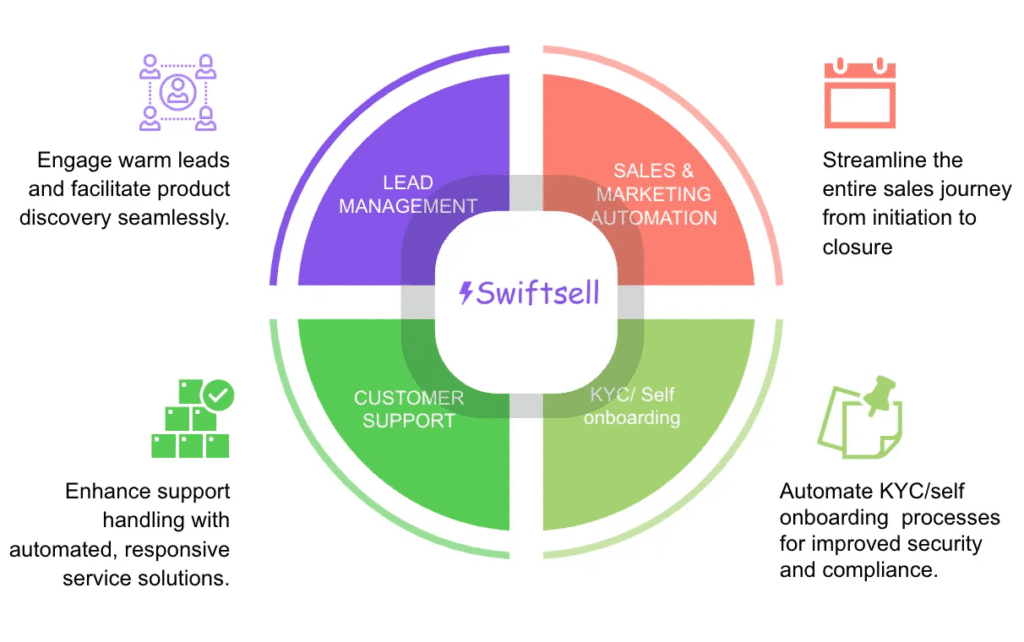
- AI-powered tools like Swiftsell help automate lead follow-ups, FAQs, onboarding flows, re-engagement, and post-purchase support.
- Real-world automation outcomes include appointment reminders (healthcare), instant onboarding (fintech), cart recovery (e-commerce), and claims support (insurance).
- Step-by-step automation strategies cover 24/7 AI support, personalization, routine task automation, omnichannel consistency, and data-driven feedback loops.
- Use the checklist to evaluate your engagement: response times, personalization, automation of repetitive tasks, omnichannel workflows, and monthly analysis of engagement patterns.
Why customer engagement should be your mission
First, consider how different customer experiences can be: one visitor leaves frustrated after a few minutes, unable to find what they need, but another visitor gets instant answers, timely suggestions, and a seamless path to their goal.
The difference in these journeys is AI-led marketing automation, tools like chatbots working behind the scenes to ensure every interaction is smooth, relevant, and responsive.
Customer engagement isn’t just about checking the “service” box anymore. It’s about creating moments where customers feel valued and delighted. And why does this matter? Research shows that businesses with high customer satisfaction scores retain 89% more clients and see a 50% bump in cross-selling opportunities. The catch? Personalized, instant interactions aren’t feasible at scale without automation.
Real use cases of customer engagement automation
Here’s how you can level up your customer engagement with automation, and still keep the human touch intact:
Automating lead follow-up on WhatsApp
Capturing leads is only the first step; following up promptly is what converts interest into action. Automated WhatsApp follow-ups ensure that every inquiry receives a timely response, nurturing leads even outside business hours. You can personalize messages based on users’ behavior, provide relevant offers or next steps without manual effort.
For instance, MargBooks implemented automated WhatsApp lead follow-ups using Swiftsell and saw over 350 qualified leads per month, significantly increasing engagement and conversion rates.
Handling FAQs with generative AI
Customers often have repetitive queries that can slow down support teams. AI chatbots powered by generative AI can provide instant, accurate answers by pulling information from multiple sources, such as FAQs, PDFs, or CRM data. This not only improves response times but also ensures consistency, freeing up human agents to focus on complex issues.
Personalized onboarding flows
The first experience sets the tone for long-term engagement. Automated onboarding flows can guide users step-by-step through your product or service, highlighting relevant features based on their profile and behavior. This reduces confusion, accelerates adoption, and helps users feel valued from the start.
Predictive re-engagement messages
Predictive automation identifies users at risk of disengagement and sends timely, tailored messages to bring them back. These can include reminders, special offers, or helpful content that keeps users connected with your brand.
Automated after-sales support
Customer care doesn’t end after the purchase. Automated after-sales support ensures that follow-ups, troubleshooting, and satisfaction checks happen promptly and consistently. This strengthens trust, encourages repeat business, and enhances overall brand loyalty.
For example, Sabine Hospitals implemented Swiftsell automation for post-visit follow-up messages at optimal intervals over WhatsApp, helping them stay top-of-mind with patients without requiring human intervention.
Industry-specific examples of engagement automation
- Healthcare: Automated appointment reminders, follow-ups, and post-visit messages keep patients informed and reduce no-shows.
- Fintech: Instant onboarding, KYC verification support, and real-time account notifications improve user experience and reduce friction.
- eCommerce: Automated abandoned cart flows, personalized product recommendations, and re-engagement campaigns boost conversions and retention.
- Insurance: Instant claims initiation, policy updates, and customer support automation make complex processes simpler and faster.
Top tools for customer engagement automation
If you’re looking for solutions to automate customer engagement and enhance the overall customer experience, here are some tools worth exploring:
Swiftsell
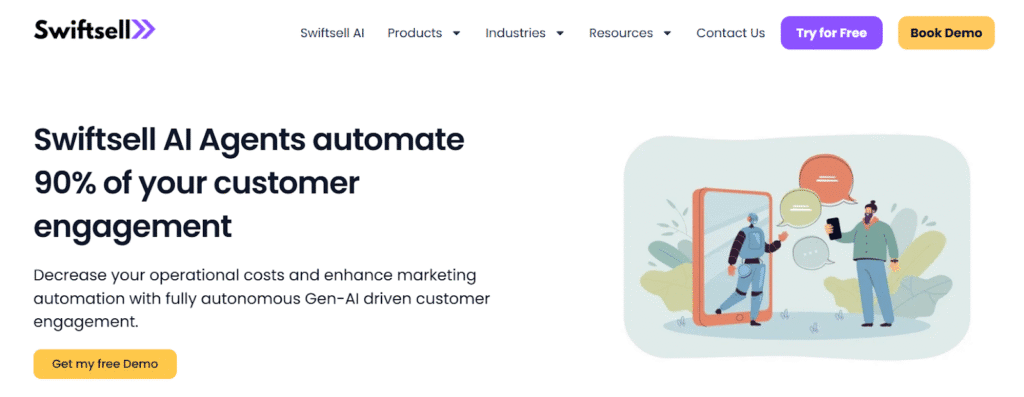
Swiftsell remains a top choice for conversational marketing and customer engagement, enabling automated conversations across multiple channels such as WhatsApp, chat, and email, while supporting workflows like lead follow-ups, onboarding flows, FAQs, predictive re-engagement, and post-purchase support.
Its deep integration with CRMs, knowledge bases, and business systems allows teams to deliver highly personalized, timely, and consistent interactions at scale without losing the human touch.
Gupshup
Gupshup offers a robust conversational‑AI platform that enables businesses to build AI‑driven bots and automate customer conversations across multiple channels (WhatsApp, chat, SMS, voice, etc.).
Its platform allows for personalized outreach, lead nurturing, support automation, and 24/7 engagement, ideal for companies that want to engage customers at every stage of their journey.
Yellow.ai
Yellow.ai goes beyond simple chat automation; it offers a full‑stack customer experience automation platform that handles chat, voice, email, and more across channels, with AI agents that deliver personalized, context-aware, omnichannel support.
It integrates with CRM and backend systems, enabling seamless workflows, scalable support, and consistent experiences for customers across regions.
Step-by-step guide to customer engagement automation
Here’s how to build customer engagement with automation, step by step, so every interaction feels intentional, personal, and effortless:
Step 1: The 24/7 charm of AI-powered customer service
Meet the star player in your automation lineup – AI-powered customer service. Imagine a customer support team that’s always on, never sleeps, and speaks every language under the sun. Too good to be true? Not really, thanks to AI chatbots.
Take this scenario. It’s 3 AM, and your customer needs urgent advice on upgrading their account or troubleshooting an issue. Instead of waiting in a queue or receiving a cold automated email, they interact with a chatbot that instantly provides answers or resources. Solutions like these don’t just keep the night owl customers happy; they build trust and loyalty by being consistently available.
And it’s not limited to basic support. Advanced AI systems, such as Swiftsell’s conversational tools, even escalate issues or redirect cases to human reps when needed, ensuring customers never feel trapped in a “robotic loop.”
This translates directly to better customer retention, reduced support load, and a glowing reputation for always being accessible – even at odd hours.
Step 2: Sprinkle in some personalization magic
Imagine walking into your favorite coffee shop, and the barista already knows you’re here for a caramel latte with soy milk. Feels pretty great, right? Personalization works the same way online.
Gone are the days of generic “Hello, Valued Customer” emails. Modern AI systems analyze customer preferences, behavior, and past interactions to craft experiences that feel tailor-made. For instance, if a customer browses fitness tools on your website but doesn’t make a purchase, an automated follow-up email might offer them a discount or suggest products they missed.
By using such AI-driven personalization, brands not only increase the chances of converting a lead but also strengthen emotional bonds with their audience. Whether it’s recommending a movie streaming plan or pre-selecting the best loan offers, personalization is the secret ingredient that fuels engagement.
Pro tip? Avoid overdoing it. Personalization should feel organic, not invasive. Focus on being helpful and relevant, not eerily overfamiliar.
Step 3: Automate the mundane, elevate the meaningful
Here’s an understatement – customer service has A LOT of repetitive tasks. From updating shipping statuses to answering the same five FAQs over and over, these chores tie up resources that could be better spent elsewhere. Automation swoops in like a time-saving superhero.
Take order tracking as an example. Instead of having staff manually reply to every inquiry, automated tools provide real-time updates to customers. Need to schedule appointments or confirm deliveries? Automation’s got it covered.
This doesn’t just mean quicker response times; it means happier employees who can focus on creative problem-solving or high-value interactions rather than getting bogged down by busywork. Think of it as delegating the grunt work to smart systems while freeing your team to do what they do best.
One e-commerce company, for instance, saw a 30% increase in satisfaction scores by adopting Swiftsell’s automated solutions to handle routine customer queries. The real win? Their human agents now had the bandwidth to focus on cases requiring empathy and expertise, making for happier customers AND employees.
Step 4: Create omnichannel magic
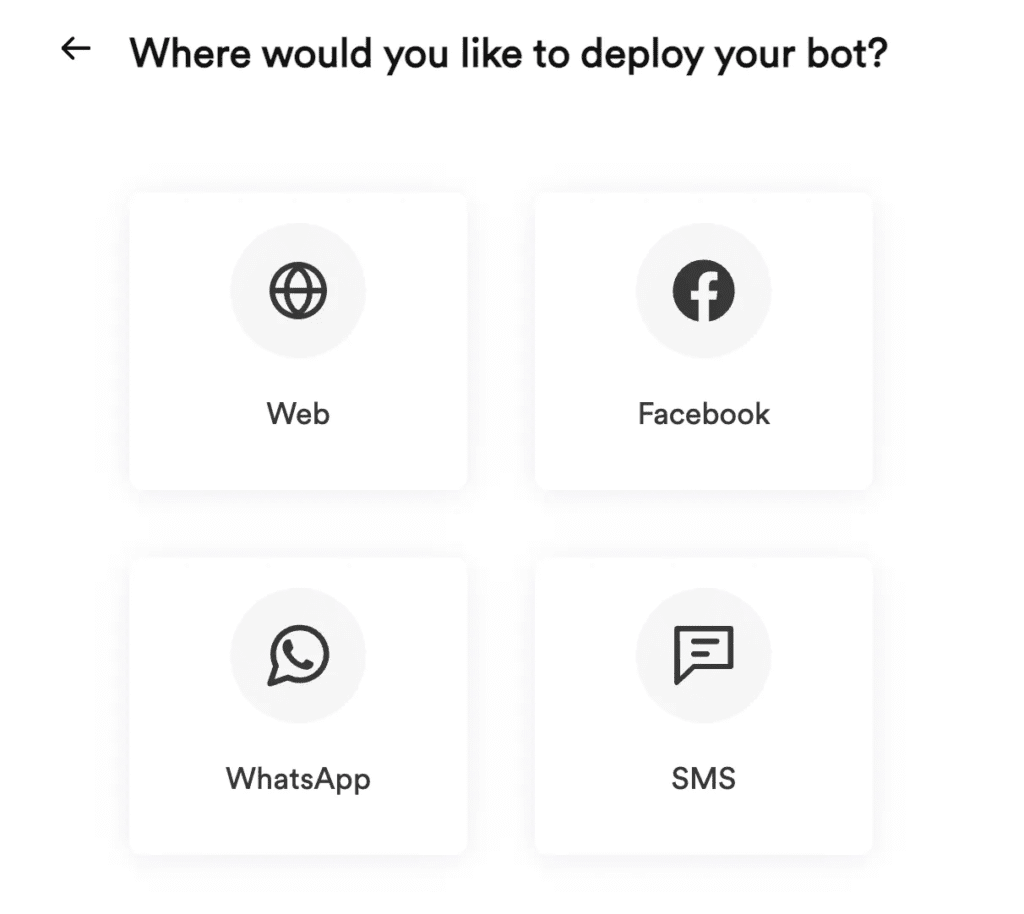
When it comes to modern engagement, customers don’t care about silos or departments. They want seamless experiences, whether they’re on your mobile app, website, or social media. An omnichannel approach powered by automation can make this dream a reality.
For instance, say a customer starts chatting on Facebook Messenger, then wants to continue the conversation through email. Swiftsell’s AI solutions ensure that the context isn’t lost and the customer doesn’t have to repeat themselves.
Consistency across platforms not only leaves customers impressed but also keeps your brand voice steady and professional. It’s all about making your interaction unified, wherever your customers decide to reach out.
Bonus benefit? Strong omnichannel engagement leads to a whopping 89% increase in customer retention.
Step 5: The data feedback loop
Automated systems don’t just interact; they learn. Every customer interaction – from a chatbot query to a product recommendation click-through – creates a wealth of data. But here’s the trick to truly outstanding engagement. It’s about taking this sea of insights and channeling it back into your strategy.
Using tools like Swiftsell, businesses can analyze patterns, understand consumer pain points, and predict future needs. Instead of guessing what customers want, you start knowing with precision. For example, noticing a spike in inquiries about seasonal discounts could nudge your team towards launching promotions proactively.
The loop? Insight -> Action -> Engagement. And it’s this constant cycle that keeps you responsive, relevant, and ahead of the competition.
Customer engagement automation checklist
Use this checklist to evaluate the current state of your customer engagement and understand if your workflows are efficient, personalized, and fully automated, or if there’s room for improvement:
 Do you respond within 30 seconds – Fast response times indicate how quickly your systems and teams can engage customers.
Do you personalize recommendations – Personalized interactions show if your engagement feels relevant and tailored to each customer.
Are repetitive tasks automated – Automation of routine tasks reveals if your team is leveraging tools to save time and scale efficiently.
Do you have omnichannel workflows – Omnichannel support reflects if your engagement is seamless across every platform your customers use.
Are you analyzing engagement patterns monthly – Regular analysis indicates if you’re continuously optimizing your customer experience based on real data.
Conclusion
Customer engagement thrives on authenticity, speed, and meaningful connections. Add automation into the mix, and you’re not just scaling your engagement efforts; you’re redefining what great customer service looks like.
Whether it’s through 24/7 chatbot assistance, custom recommendations that WOW, or data-backed feedback loops, automation is no longer a luxury. It’s the foundation for businesses aiming to communicate better, convert faster, and delight consistently.
With Swiftsell, you can automate lead follow-ups, onboarding flows, FAQs, and post-purchase support across channels, ensuring every customer interaction is timely, personalized, and impactful.
Book a demo with Swiftsell today.
FAQs
What is customer engagement automation?
Customer engagement automation uses software or AI tools to streamline interactions, manage repetitive tasks, and deliver timely, personalized experiences across channels like chat, email, and messaging.
How does AI improve customer engagement?
AI enhances engagement by analyzing user behavior, providing instant responses, predicting needs, personalizing communication, and automating workflows. This lets you offer interactions that are more relevant, efficient, and consistent at scale.
What are examples of automated engagement workflows?
Examples include automated lead follow-ups, personalized onboarding flows, FAQ handling via chatbots, predictive re-engagement messages, abandoned cart reminders, and post-purchase support across multiple channels.
How can small businesses improve engagement with automation?
Small businesses can improve engagement by implementing chatbots, automated follow-ups, personalized recommendations, and analytics-driven workflows, optimizing interactions without adding extra manual workload.